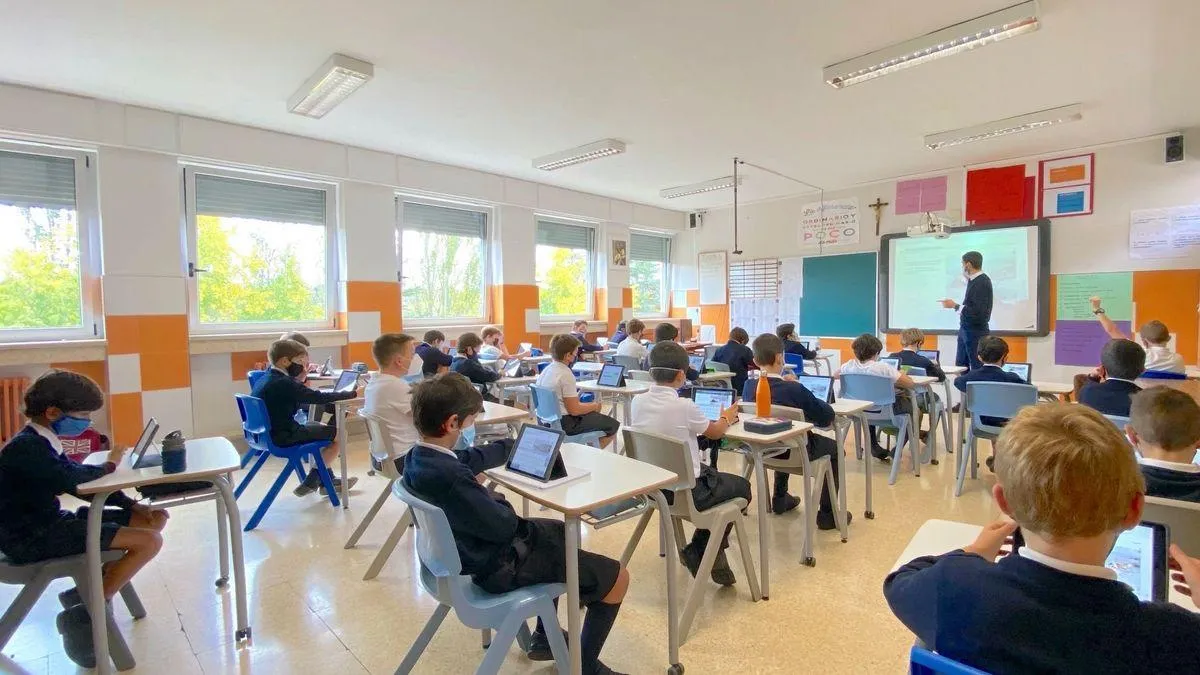

A public primary school in Budapest partnered with the Hungarian Environmentally Conscious Building Association (HuGBC) and its WELL Standard working group to conduct a structured indoor air quality pilot programme across selected classrooms. Prior to the project, the school had no real-time visibility into key environmental parameters, no data-driven basis for ventilation decisions, and no mechanism to alert teaching staff when CO₂, temperature, or particulate matter levels deviated from recommended thresholds. The objective was to establish a measurable IAQ baseline, identify priority areas for improvement, and equip staff with actionable, real-time data to support healthier learning environments.
The school required a monitoring infrastructure capable of capturing a comprehensive set of IAQ parameters across multiple classroom environments simultaneously, with minimal installation complexity.
The solution included:
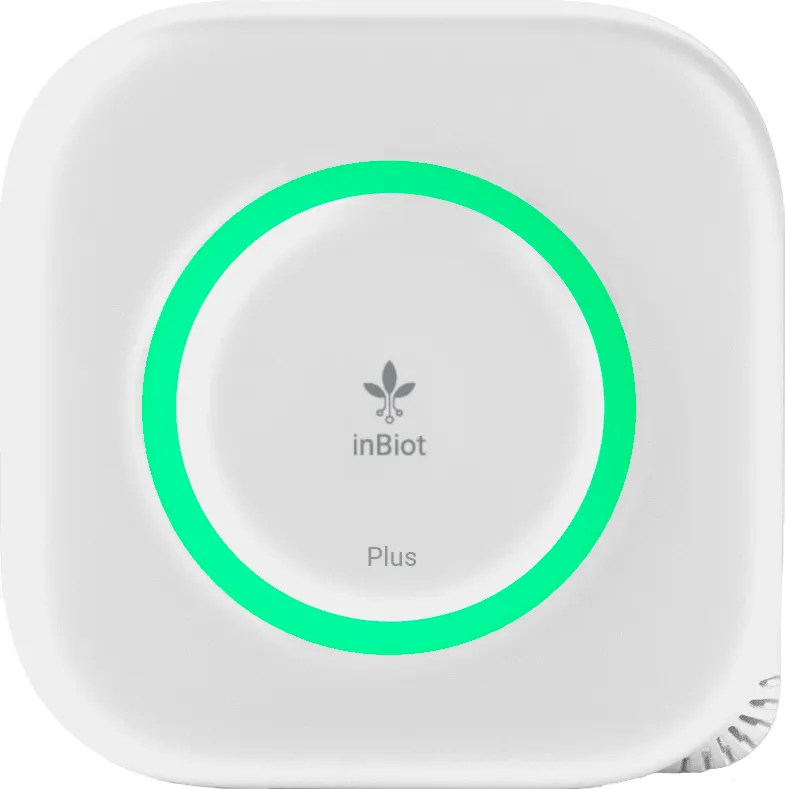
- MICA Plus devices deployed across three distinct spaces and classrooms monitoring continuously: CO₂, TVOC, formaldehyde (HCHO), PM1, PM2.5, PM4, PM10, temperature, and relative humidity.
- Wi-Fi connectivity for two devices and cellular connectivity for one, enabling data transmission across different network conditions within the building.
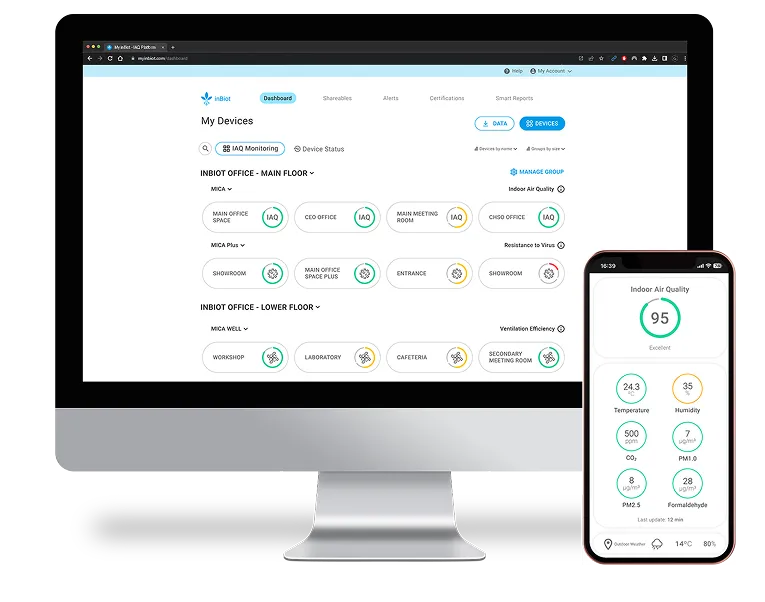
- My inBiot Business platform providing real-time dashboards and web-based access to continuous measurement data for project coordinators and school management.
- Integrated visual CO₂ alert system on each MICA Plus device, delivering green, yellow, and red light signals directly visible to teaching staff and students in the classroom.
The deployment ran as a one-month pilot from March to April 2026, covering a transitional seasonal period with variable occupancy and ventilation conditions. The combination of real-time platform access and on-device visual feedback enabled both remote data analysis by HuGBC researchers and immediate behavioural response by classroom staff.

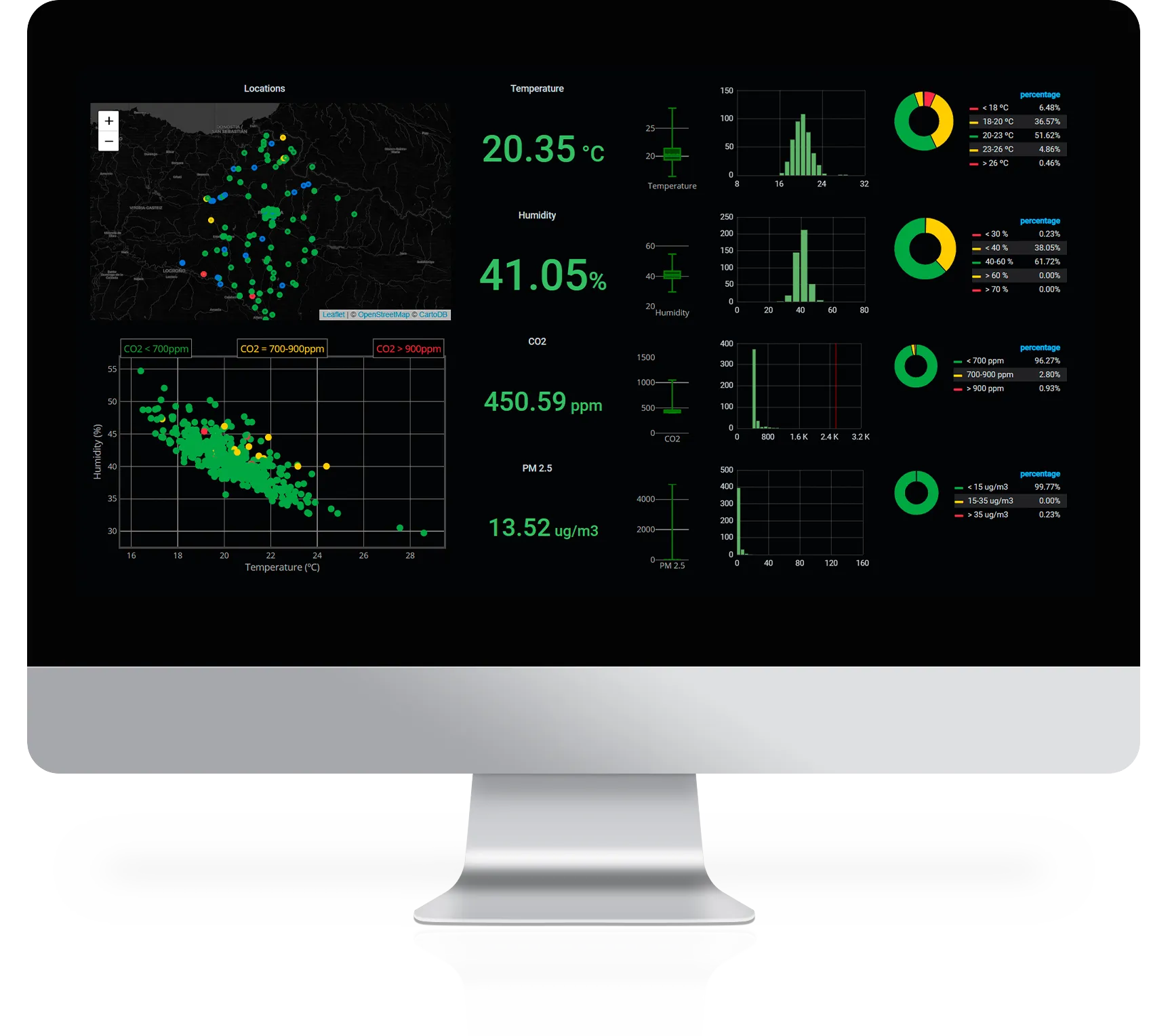
- CO₂ monitoring and ventilation behaviour: Real-time CO₂ alerts prompted teaching staff to open windows during lessons, directly reducing peak concentrations; CO₂ levels remained in the excellent range (below 800 ppm) between 75% and 92% of the measurement period depending on the room.
- Formaldehyde control: Formaldehyde concentrations remained below 70 μg/m³ across all three monitored spaces for the entire measurement period, confirming no critical chemical emission sources in the assessed rooms.
- Particulate matter baseline: PM2.5 levels were in the excellent range (below 15 μg/m³) for 96–99% of the measurement period, and PM10 remained below 50 μg/m³ for 100% of the period across all rooms, establishing a solid air quality baseline for school management.
- Temperature and humidity evidence: Measured temperature averages of 23–27°C and relative humidity averages of 28–33% both outside recommended comfort ranges, provided school management with quantified evidence to prioritise HVAC adjustment and humidity control interventions.
- Staff awareness and operational protocols: The on-device visual alert system increased teacher awareness of ventilation needs in real time, supporting the development of data-informed classroom ventilation routines without requiring access to the digital platform.
- Scalable monitoring infrastructure: The pilot demonstrated that a three-device, multi-room deployment with mixed connectivity could generate reliable, granular IAQ data across a functioning school environment, providing a replicable model for broader rollout across additional classrooms or school buildings.
,
API licences
My inBiot Business licences
Custom Business Intelligence dashboard
Temperature, Humidity, CO2, TVOC, PM2.5, PM10, PM4.0, PM1.0 & Formaldehyde
Budapest, Hungary
2026



.jpg)