Products


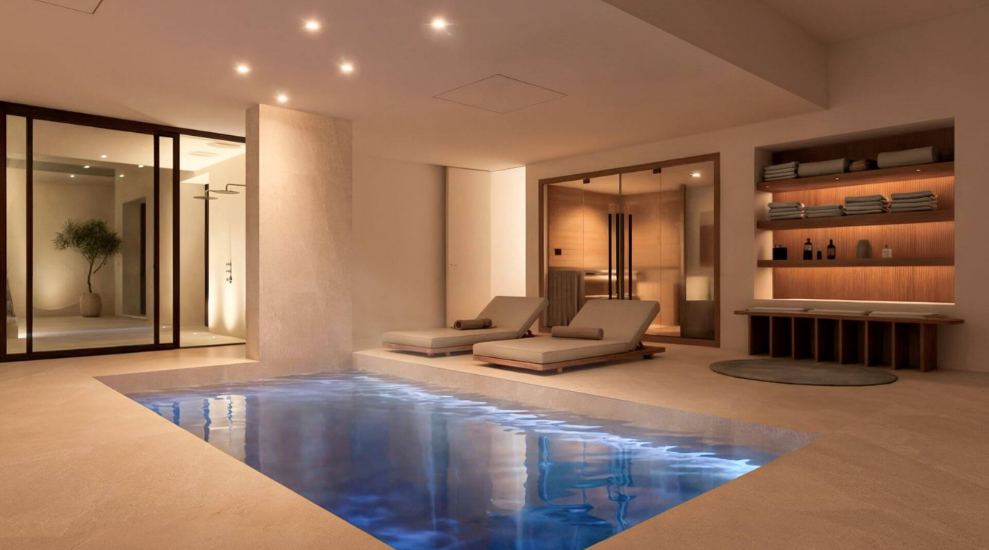
Villa Ayantam, located in the Cascada de Camoján estate in Marbella (Spain), is the first residential project in the country to achieve a BREEAM Outstanding rating at design stage, and an international reference as a newly built single-family home certified to BREEAM Outstanding. The project incorporates a continuous indoor air quality (IAQ) monitoring architecture connected to the BMS, a technical condition that supports both the BREEAM assessment and the building’s in-use operation. inBiot took part in the deployment with MICA Plus devices integrated via Modbus into Schneider Electric’s EcoStruxure Building Operation platform. [Read the full technical case study]

Villa Ayantam is a high-end detached single-family home, conceived as a positive energy balance building, sited on one of the most exclusive plots of Marbella’s Golden Mile. The project was developed by S&H Sun Coast Real Estate, designed by OÖD Architects (JL Manceras Rodríguez and Bettina Rosasco), with MEP engineering by Peláez Ingeniería, project management by Ingemantec for main contractor Aryon Buildings, and sustainability and BREEAM consultancy by ZEROCEM.
At design stage, Villa Ayantam scored 92.16 in BREEAM, the highest figure recorded for a residential project in Spain, placing the building among the less than 1% of assets that reach the Outstanding rating. The recognition has been consolidated with the Best Residential Building award at the BREEAM ES Awards 2024, the Schneider Electric Sustainability Impact Awards 2024 Country Winner in Spain, and finalist status at the REBUILD 2025 Advanced Architecture Awards.
The technical strategy combines bioclimatic design, high-performance envelope, water self-sufficiency through rainwater harvesting and a set of high-efficiency active systems: air-to-water heat pump with underfloor heating, VRV cooling, REC Alpha photovoltaics, balanced mechanical ventilation with heat recovery and, as a supervisory layer, Schneider Electric’s EcoStruxure Building Operation, operating as a Building Management System on open protocols (BACnet IP, KNX, Modbus).
In projects targeting the highest BREEAM ratings, indoor air quality is no longer a comfort metric: it becomes technical evidence. The Health and Wellbeing category requires measurement and traceability of parameters such as CO₂, particulate matter, VOCs, formaldehyde and other contaminants, in line with the BREEAM ES Vivienda 2020 technical guidance. The audit is not resolved with a one-off measurement: it requires continuous, zone-representative data consistent with the control logic of the building’s active systems.
Villa Ayantam added three conditions that raised the usual technical bar for a residential project.
The first is coexistence with a commercial-grade BMS. EcoStruxure Building Operation acts as the central supervisory layer, integrating subsystems that operate autonomously but in coordination. For IAQ to deliver operational value rather than reporting only, data must reach the BMS with appropriate granularity and consistency, not as aggregated or delayed values.
The second is location. The plot, on an elevated area of Camoján, posed connectivity constraints that required a robust architecture capable of guaranteeing data continuity without gaps that would compromise either the BREEAM assessment or subsequent operation.
The third is the dual BREEAM and WELL design criteria. The project was designed to demanding WELL standards on health and comfort, which meant IAQ monitoring had to cover parameters relevant to both frameworks with a single hardware deployment, avoiding duplicate sensor networks or complicated reporting.
The technical solution was designed to address those three conditions at the measurement layer, not at the software layer.
Hardware and monitored parameters. Four MICA Plus devices were deployed with WiFi connectivity and Modbus communication. Parameters monitored continuously include temperature, relative humidity, CO₂, TVOC, formaldehyde and PM1.0, PM2.5, PM4.0 and PM10 particulate matter. This coverage meets both the BREEAM Health and Wellbeing requirements and the air quality parameters relevant to the WELL design criteria.
BMS integration. Devices were integrated via Modbus into EcoStruxure Building Operation, so IAQ values feed into the same supervisory environment that manages HVAC, photovoltaics, heat pumps and the rest of the subsystems. The integration is not limited to visualisation: data is available to validate ventilation strategies and to allow the technical team to compare actual performance against design models.
Data and reporting layer. The deployment includes My inBiot Business licences, API access and a custom Business Intelligence dashboard. This architecture allows historical data export in auditable formats without further technical intervention, a necessary condition both for responding to a BREEAM audit and for feeding internal operational reporting.
In the words of ZEROCEM’s technical lead, “the integration of the MICA Plus monitoring devices has enabled us both to advance our indoor air quality research and to meet all the BREEAM health and wellbeing requirements” (Antonio Sánchez, Founder and Technical Director, ZEROCEM).
The Villa Ayantam case illustrates a shift that applies beyond premium residential. When IAQ is integrated as building infrastructure, the same data stream simultaneously serves three different logics.
For the certification phase, continuous and traceable data replaces one-off measurements as evidence before the auditor. This reduces the risk that incomplete or unrepresentative data may penalise the score, particularly under frameworks like BREEAM, WELL or RESET, where traceability and continuity are a condition of validity.
For the operational phase, BMS integration gives the Facility Manager objective information to take ventilation decisions, validate heat recovery performance or detect deviations from design intent. Continuous monitoring turns subjective complaints into verifiable data and supports the justification of SLAs and environmental KPIs.
For ESG reporting, auditable historical data feeds directly into disclosure frameworks that require continuous evidence on health and wellbeing indicators in buildings, with no rework or data reconstruction.
The common factor is data quality at source. A sophisticated BMS architecture does not compensate for imprecise or discontinuous readings: errors propagate to control logic, reporting and audit. For that reason, in projects with demanding certification and operational objectives, the relevant technical decision is taken at the measurement layer.

The IAQ monitoring deployment supported several verifiable results in the project.
The highest BREEAM score was backed by accurate, continuous indoor air quality data aligned with the project’s zero emissions strategy. Reliable environmental information enabled informed decisions during design, commissioning and the early operational phases. Full BMS integration helped the technical team validate ventilation, comfort and energy efficiency strategies. The monitoring infrastructure overcame the plot’s connectivity constraints, securing a stable data flow for both BREEAM assessment and continuous operation.
Villa Ayantam shows that continuous indoor air quality monitoring, when designed as a structural layer of the building and natively integrated into the BMS, ceases to be an ancillary component and becomes critical infrastructure. Zone coverage, 24/7 continuity, data traceability and the ability to integrate with platforms such as EcoStruxure are not optional requirements: they are the foundation that supports both the certification audit and subsequent building operation.
In this context, inBiot’s continuous monitoring solutions, with multi-protocol integration (Modbus, BACnet, MQTT, API) and auditable reporting aligned with BREEAM, WELL, RESET, LEED and Fitwel, provide the technical foundation that allows a single data stream to serve certification, operation and ESG reporting without duplicating infrastructure.
The full technical deployment, including device configuration, Modbus integration with EcoStruxure and verifiable project results, is available in the Villa Ayantam case study.